
🛡️ No Prepayment
Pay only on arrival
🚗 Door-to-Door Transfer
Directly to the hotel
🏥 Expert Care
English-speaking support
Key Facts
• Unique amber therapy — succinic acid (C₄H₆O₄) from Baltic amber, found nowhere else in the world
• 24-kilometre sandy beach — finest Baltic sand, broad and flat
• Iodine-bromine brine spring — own source, for baths and inhalation
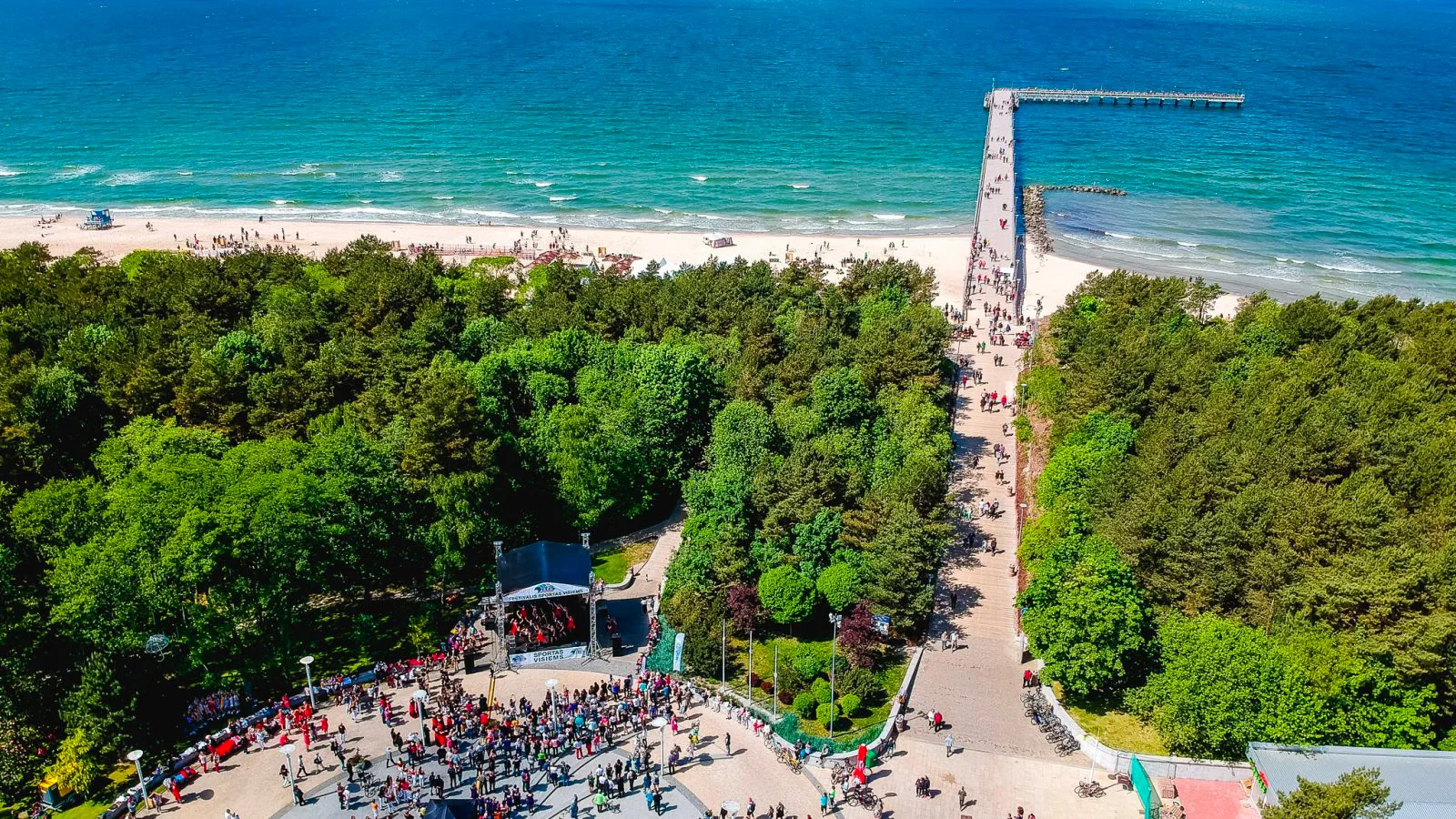
• 470-metre pier — one of the longest in northern Europe, natural inhalation platform
• Amber Museum — in the Tiškevičius Palace, one of the world’s largest amber collections
• Specialisation ★★★ — respiratory/”>Respiratory, dermatology, musculoskeletal, gynaecology
• German-speaking care at international spa hotels
• No prepayment — pay at the hotel on arrival
Palanga at a Glance
| Feature | Details |
|---|---|
| Founded as Spa | 19th century |
| Healing Factors | Baltic Sea climate, iodine-bromine brine, amber succinic acid, peat moor |
| Beach | 24 km of finest sand, broad and flat |
| Pier | 470 m, one of the longest in northern Europe |
| Specialisation | Respiratory ★★★, Dermatology ★★★, Musculoskeletal, Gynaecology |
| Unique Feature | Amber therapy — succinic acid, worldwide exclusive |
| Kurdauer | 14–21 days recommended |
What Does Palanga Treat?
palanga is a universal Baltic spa with the full thalassotherapy spectrum — extended by the unique amber therapy unavailable at any other spa resort.
– Chronic bronchitis, asthma — iodine-rich sea air and brine inhalation on the pier (★★★) – COPD — salt aerosol cleanses bronchi, facilitates expectoration – Psoriasis, neurodermitis — succinic acid and brine calm the skin (★★★) – Arthrosis, rheumatism — warm brine baths and peat moor packs – Gynaecological conditions — peat moor and brine therapy – Thyroid disorders — natural iodine absorption via skin and respiratory tract – Stress, burnout — beach walking, amber therapy, sea climate
The Healing Factors of Palanga
| Factor | Property | Effect |
|---|---|---|
| Baltic Sea Climate | Iodine-rich sea air, mild summers | Deep inhalation — iodine liquefies mucus |
| Succinic Acid (C₄H₆O₄) | From Baltic amber, heated to 50–60 °C | Stimulates cellular regeneration, anti-inflammatory on skin |
| Iodine-Bromine Brine | Own spring, 22–28 °C | Baths calm skin, relax muscles |
| Peat Moor | Lithuanian high-moor, humic acids | Deep heat for joints and gynaecological organs |
| Pier | 470 m over the sea | Natural inhalation platform — highest iodine concentration |
Treatments in Palanga
Amber therapy: The unique Palanga treatment. Baltic amber is heated to 50–60 °C, releasing succinic acid as a fine vapour. In the amber sauna, the vapour is absorbed through the skin and lungs — the succinic acid enters the mitochondria of cells and stimulates energy production. Amber salve — succinic acid dissolved in oil — is applied directly to psoriatic plaques and neurodermitis lesions. The therapy is clinically documented for psoriasis, neurodermitis and inflammatory skin conditions and exists nowhere else in the world. Sessions are prescribed daily or every second day, 15 minutes in the sauna.
Brine bath and inhalation: The iodine-bromine brine from the Palanga spring is used as a full bath at 22–28 °C and as an inhalation via nebuliser. The highest iodine concentration is reached on the 470-metre pier: a slow walk over the sea, surrounded by surf aerosol and iodine-saturated air — the most intensive natural inhalation therapy on the Baltic coast.
Peat moor pack: Lithuanian peat moor — rich in humic acids and organic compounds — is heated to 40–42 °C and applied as a full-body or partial pack. The packs are particularly effective for gynaecological conditions and arthrosis.
Beach walking: The 24-kilometre sandy beach — broad, flat, with the finest sand — invites extended barefoot walks. The combination of foot reflex stimulation, iodine-rich sea air and movement is a full therapeutic application in itself.
History and Atmosphere
Palanga was already a significant Hanseatic trading port in the Middle Ages. Amber — the “Gold of the North” — has been collected and worked here for millennia. The spa era began in the 19th century when Count Józef Tyszkiewicz (Tiškevičius) acquired the estate and built a magnificent Neo-Renaissance palace, completed in 1897. Today, the palace houses the Amber Museum — one of the world’s largest collections — set in a botanical garden with exotic plants from around the globe.
Palanga is the most popular Lithuanian seaside resort — lively in summer, quiet in winter. The town pulses along Basanavičiaus Street, a pedestrian zone with cafés, restaurants and music directly behind the dune. The spa district, with its spa hotels, the spa park and the pier, provides a quiet therapeutic environment. The long white nights of the Baltic summer — the sun barely sets in June — make a summer spa stay in Palanga an unforgettable experience.
Attractions in Palanga
– 🏛 Amber Museum — in the Tiškevičius Palace, one of the world’s largest amber collections – 🌉 Pier — 470 m, symbol of Palanga, spectacular at sunset – 🌿 Botanical Garden — around the palace, exotic plants and sculpture park – 🎵 Basanavičiaus Street — lively pedestrian zone directly behind the dune – 🏖 Beach — 24 km of the finest sand, one of the most beautiful on the Baltic
Getting to Palanga from Germany
Palanga lies on the Lithuanian Baltic coast. Access is by flight to Palanga International Airport — seasonal direct connections from some German cities. Alternatively, fly to Kaunas (240 km, 2 hours 45 minutes transfer) or Vilnius (330 km, 3 hours 30 minutes transfer). Flight time from German airports is approximately 2 hours. The door-to-door transfer by road — over 1,200 kilometres — is only practical with an overnight stop.
A Typical Spa Day in Palanga
| Time | Activity |
|---|---|
| 07:30 | Rise — walk on the pier at sunrise |
| 08:00 | Breakfast |
| 09:00 | Amber sauna — 15 minutes |
| 10:00 | Brine bath — 20 minutes |
| 11:00 | Beach walking — 1 hour, barefoot |
| 12:30 | Lunch |
| 14:00 | Peat moor pack — 20 minutes |
| 15:00 | Massage or physiotherapy |
| 16:30 | Walk in the Botanical Garden |
| 17:30 | Dinner |
| 19:00 | Evening walk — pier at sunset |
Frequently Asked Questions
What exactly is amber therapy?
Baltic amber contains succinic acid — an organic acid that acts on the mitochondria of cells, stimulating energy production. At Palanga, amber is heated to 50–60 °C, releasing succinic acid as a vapour that is absorbed through the skin and lungs. The therapy is scientifically investigated and shows measurable improvement in psoriasis and inflammatory skin conditions.
Can I buy amber in Palanga?
Yes — Palanga is the centre of Baltic amber craftsmanship. Along Basanavičiaus Street and in the Amber Museum, you will find authentic Baltic amber in all forms — from raw amber to filigree jewellery. Amber is the quintessential souvenir of a Lithuanian spa stay.
Is Palanga too crowded in summer?
Basanavičiaus Street is lively in high summer, but the spa district with the spa hotels, the park and the pier remains quiet. The long Baltic summer nights create a special atmosphere — the sun sets around 11 PM in June.
Are there German-speaking doctors in Palanga?
At the international spa hotels, doctors speak English, and some German is available. The German-speaking care infrastructure is less developed than in Czech or Polish spas but is functional for a spa stay. Compare Lithuanian spas — see all comparisons.
Note: This information is for general guidance only and does not replace individual medical advice or diagnosis by a physician.
Author: Kuropa Editorial Team
Expert review: Anastasia Folak, Head of Spa Advisory
15+ years of experience in spa travel consulting
More about our expertise →