
🛡️ No Prepayment
Pay only on arrival
🚗 Door-to-Door Transfer
Directly to the hotel
🏥 Expert Care
English-speaking support
Key Facts
• Over 130 thermal springs — more than any other capital city in the world
• Ottoman baths from the 16th century — Rudás (1550) and Király (1565) still operating
• Gellért Bath — Art Nouveau icon, 15 indoor pools, 3 outdoor, 10 saunas
• Széchenyi Bath — Europe’s largest thermal complex, 18 pools, outdoor pool open year-round
• St. Stephen’s Spring — 77 °C from 1,256 metres deep, feeds Gellért
• German-speaking doctors in international spa hotels
• No prepayment — pay at the hotel on arrival
Budapest at a Glance
| Feature | Details |
|---|---|
| Springs | 130+ thermal springs, 22–77 °C |
| Water | Ca-Mg-HCO₃, 1.8 g/l, CO₂ 375 mg/l, fluoride, boron |
| Signature Baths | Gellért ★★★ (1918), Széchenyi ★★★ (1913), Rudás (1550) |
| Specialisation | Musculoskeletal ★★, Digestion ★★, General Rehabilitation |
| Unique Feature | Urban spa culture — cure and capital city in one |
| Kurdauer | 7–21 days |
What Does Budapest Treat?
Budapest is a general medical spa with a broad indication spectrum — not an extreme specialist like karlovy vary or Jáchymov, but a solid, effective treatment for the most common chronic conditions.
– arthrosis — thermal baths relieve joint load, warmth and minerals reduce pain – Chronic back pain — underwater massage, Thermal Bath, physiotherapy – Rheumatoid arthritis — mild thermal baths during non-inflammatory phases – Chronic gastritis — drinking cure with hydrogen-carbonate water – Metabolic disorders — drinking cure and exercise – osteoporosis — calcium from the thermal water and movement – Stress, burnout — combination of spa treatment and cultural recovery – General rehabilitation — after surgery or illness, rebuilding physical capacity
The Baths of Budapest
| Bath | Style | Temperature | Note |
|---|---|---|---|
| Gellért ★★★ | Art Nouveau (1918) | 27–40 °C | 15 indoor pools, 3 outdoor, 10 saunas, St. Stephen’s Spring 77 °C |
| Széchenyi ★★★ | Neo-Baroque (1913) | 28–40 °C | Europe’s largest thermal complex, 18 pools, outdoor pool steaming in winter |
| Rudás | Ottoman (1550) | 16–42 °C | Original Turkish bath with 16th-century stone cupola |
| Király | Ottoman (1565) | 26–40 °C | Oldest surviving Turkish bath in Budapest |
| Lukács | Neoclassical | 22–40 °C | Traditional bath, popular with locals |
Treatments in Budapest
Thermal bath: The communal bath experience — a budapest speciality. At Gellért, you move through 15 indoor pools at graduated temperatures, the Art Nouveau mosaics and marble columns above you, the 77 °C St. Stephen’s Spring feeding the system from 1,256 metres underground. At Széchenyi, you sit in the outdoor pool at 38 °C while snow falls around you in winter — Budapest’s most iconic spa image. The minerals are absorbed transdermally; the buoyancy reduces joint load by 90 percent; the warmth relaxes skeletal muscles. Bathing sessions last 20–30 minutes, prescribed daily or every second day. Thermal bath treatment — learn more.
Drinking cure: The St. Stephen’s Spring at Gellért produces drinking water used for chronic gastritis, gastric ulcers and metabolic disorders. The water is drunk at the source in the bath’s drinking hall — a cooler, less formal drinking cure than the colonnade rituals of Karlovy Vary or Mariánské Lázně.
Underwater massage and physiotherapy: In the spa hotels and baths, physiotherapists provide individual treatments — guided movement in warm water, manual massage, and lymphatic drainage. The buoyancy enables pain-free mobilisation that would be impossible on land.
CO₂ bath: The natural CO₂ content of Budapest’s thermal water — 375 mg/l — is used in individual baths at the spa hotels. The gas dilates capillaries, lowers blood pressure, and improves peripheral circulation. Less intensive than the co₂ baths of Mariánské Lázně or Poděbrady, but effective and safe for a broad patient population.
History and Atmosphere
Budapest’s bathing culture predates Hungary itself. The Romans built baths in Aquincum — Roman Budapest — in the 2nd century AD. But the city’s thermal identity was forged during 150 years of Ottoman rule starting in 1541. The Turks built domed bathhouses directly over the springs — Rudás (1550) and Király (1565) are still in operation, among the very few original Turkish baths outside Turkey. Bathing under a 500-year-old stone cupola, sunlight filtering through coloured glass stars set into the dome, is an experience that no modern spa building can replicate.
The Grand Baths arrived around 1900, when Budapest was the co-capital of the Austro-Hungarian Empire and determined to rival Vienna in splendour. Gellért, opened in 1918, and Széchenyi, opened in 1913, were statements of imperial ambition — thermal palaces that would announce Budapest as the spa capital of Europe. They succeeded.
Today, Budapest is a pulsating metropolis where the spa is not an escape from city life but part of it. Locals use the thermal baths the way Parisians use cafés — for socialising, relaxing, and maintaining health. This urban-spa duality is unique in the world. You can spend your morning in medical treatment at Gellért, your afternoon exploring the Castle District, and your evening at a concert or restaurant. No other medical spa in our network offers this combination.
Attractions Near Budapest
– 🏛 Parliament — one of the world’s largest parliament buildings, directly on the Danube – 🏰 Buda Castle — UNESCO World Heritage, royal palace with panoramic city views – 🎵 Fisherman’s Bastion — fairytale viewing terrace with seven towers – 🌉 Chain Bridge — symbol of Budapest, connecting Buda and Pest – ⛪ Matthias Church — Gothic coronation church of Hungarian kings – 🗿 Heroes’ Square — monumental square with statues of Hungarian history
Getting to Budapest from Germany
Budapest is well connected from Germany. Budapest Airport has direct flights from all major German airports — flight time approximately 1 hour 30 minutes, transfer to the spa hotel 20–30 minutes. The Railjet from Munich and Vienna offers a comfortable train connection to Budapest Keleti station. The door-to-door transfer by road — approximately 750 kilometres from Nuremberg (7 hours) — is less practical than flying for this distance.
A Typical Spa Day in Budapest
| Time | Activity |
|---|---|
| 07:30 | Rise — walk to the thermal bath |
| 08:00 | Thermal bath — 20–30 minutes at Gellért or Széchenyi |
| 09:00 | Breakfast in the spa hotel |
| 10:00 | Physiotherapy or individual exercise |
| 11:30 | Drinking cure at St. Stephen’s Spring |
| 12:30 | Lunch |
| 14:00 | Massage or CO₂ bath |
| 15:30 | City exploration — Castle District, Danube promenade, Market Hall |
| 17:30 | Dinner |
| 19:00 | Evening walk — illuminated Parliament across the Danube |
Frequently Asked Questions
Is Budapest a real medical spa or just a thermal city?
Both — and that is its unique value. The Gellért and Széchenyi baths are fully equipped medical facilities with spa doctors and individualised treatment plans. At the same time, Budapest is a world capital of two million. You complete your morning medical programme and spend the afternoon in a city with opera, galleries and gastronomy — a combination no other European spa resort offers.
Which bath is best for a medical cure?
Gellért has 15 indoor pools, a dedicated spa hotel, and the most structured medical programme — ideal for a prescribed cure. Széchenyi is larger, livelier, and better for independent bathing. Rudás is quieter, more atmospheric, and has the least chemically treated water — preferred by purists.
Are there German-speaking doctors in Budapest?
At the international spa hotels and at Gellért, doctors speak English and some German. The German-speaking care is less comprehensive than in Czech spas but sufficient for a medical cure. English is widely spoken by medical staff.
Can I combine Budapest with Hévíz?
Ideally — the transfer between Budapest and Hévíz takes about two hours. A one-week Budapest stay for culture and general thermal treatment followed by one or two weeks at Hévíz for intensive musculoskeletal therapy is a perfect Hungarian combination. Compare Hungarian spas — see all comparisons.
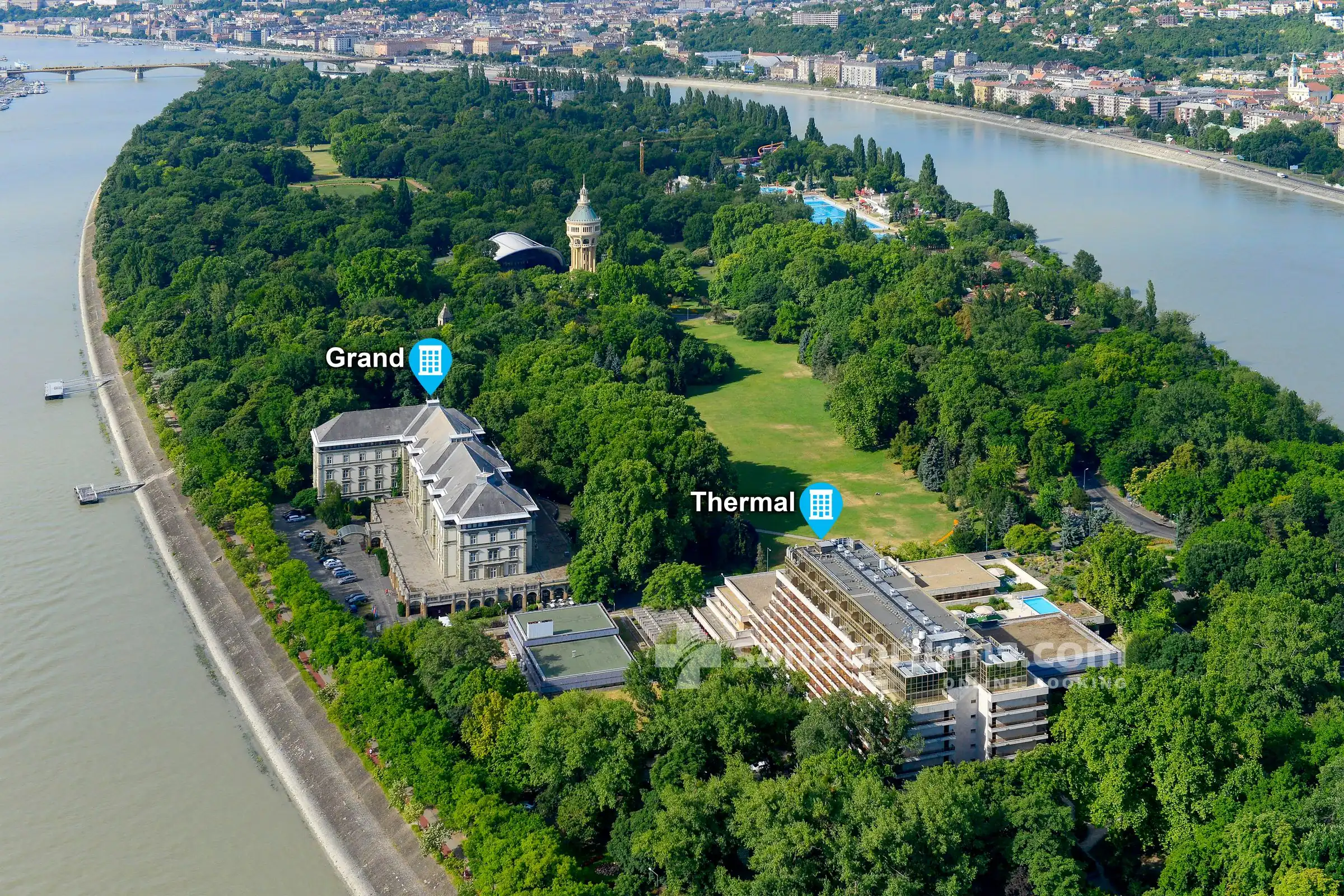
Note: This information is for general guidance only and does not replace individual medical advice or diagnosis by a physician.

Author: Kuropa Editorial Team
Expert review: Anastasia Folak, Head of Spa Advisory
15+ years of experience in spa travel consulting
More about our expertise →